
Your systems already know.
Nobody can ask them.
PretzelPort builds internal data and AI platforms that pull scattered information into one place — so the answer is there when someone needs it, not three days later.
One thing. Five systems. Each of them right.
Nearly every engagement starts in the same place. Information about one thing — a product, an asset, a supplier, a project — sits across an ERP, a PDM system, a lab system, a file share, and the spreadsheet everyone quietly depends on. Each was a sensible decision when it was made. Each holds a piece that is true.
The cost never appears as a line item. It appears when someone has to reassemble the picture under time pressure — the morning before a customer visit, an hour before the decision, the week the auditor arrives.
The bill arrives in pieces
- Hours spent hunting through spreadsheets, decks and shared drives for numbers that already exist.
- Meetings held to establish what happened, instead of deciding what to do about it.
- Rework and wrong calls, made on information that was out of date before the meeting started.
- Money left on the table: contract prices not applied, duplicates in master data, work done twice.
- The gap between a problem appearing and anyone knowing why.
Three ways in. Most clients walk all three.
Start wherever it hurts most. The pieces are built to stack.
Connected data foundations
One record per thing — a product, an asset, a supplier — assembled from every system that holds a piece of it. Duplicates merged, entities linked, kept current rather than migrated once.
Answers on your data
Ask in your own words and get an answer with its sources attached. Search that understands your vocabulary — part numbers, compound IDs, machine types — instead of guessing at it.
Prototype to product
The demo worked, everyone was enthusiastic, and six months later it is still a demo. We take it the rest of the way: real data, real users, someone to call when it breaks.
We build products, not tooling.
We learn the business well enough to decide what should be built, build the whole of it, and stay until people actually use it. You get something that works — not a pipeline with no user, and not a prototype that needs a maintainer before it needs a roadmap.
A months-long search, asked as a question

// more sources than any one person could read
For a large pharmaceutical organization, we are building a platform that brings together public scientific databases, internal lab results, and years of past experiments — more sources than any one person could read through.
With AI on top, researchers ask directly which candidates look most promising, and which good ones have been missed. What was a months-long manual search is something they now do themselves, in minutes.
That is the shape of everything we build: scattered sources linked properly, with an interface people use without being trained to.
| Measure | Before | After |
|---|---|---|
| Who could ask | Two people who knew the query language | Any researcher, in their own words |
| Time to an answer | Weeks to months, by hand | Minutes, self-service |
| Sources covered | Whichever ones fit in the analysis | All of them, every time |
| Provenance | In the analyst's notes, if anywhere | Attached to every answer |
At home where the data is hard
Four industries that look nothing alike, with the same problem underneath each of them.
Pharma & life sciences
Research data across public databases, lab systems, and years of past experiments.
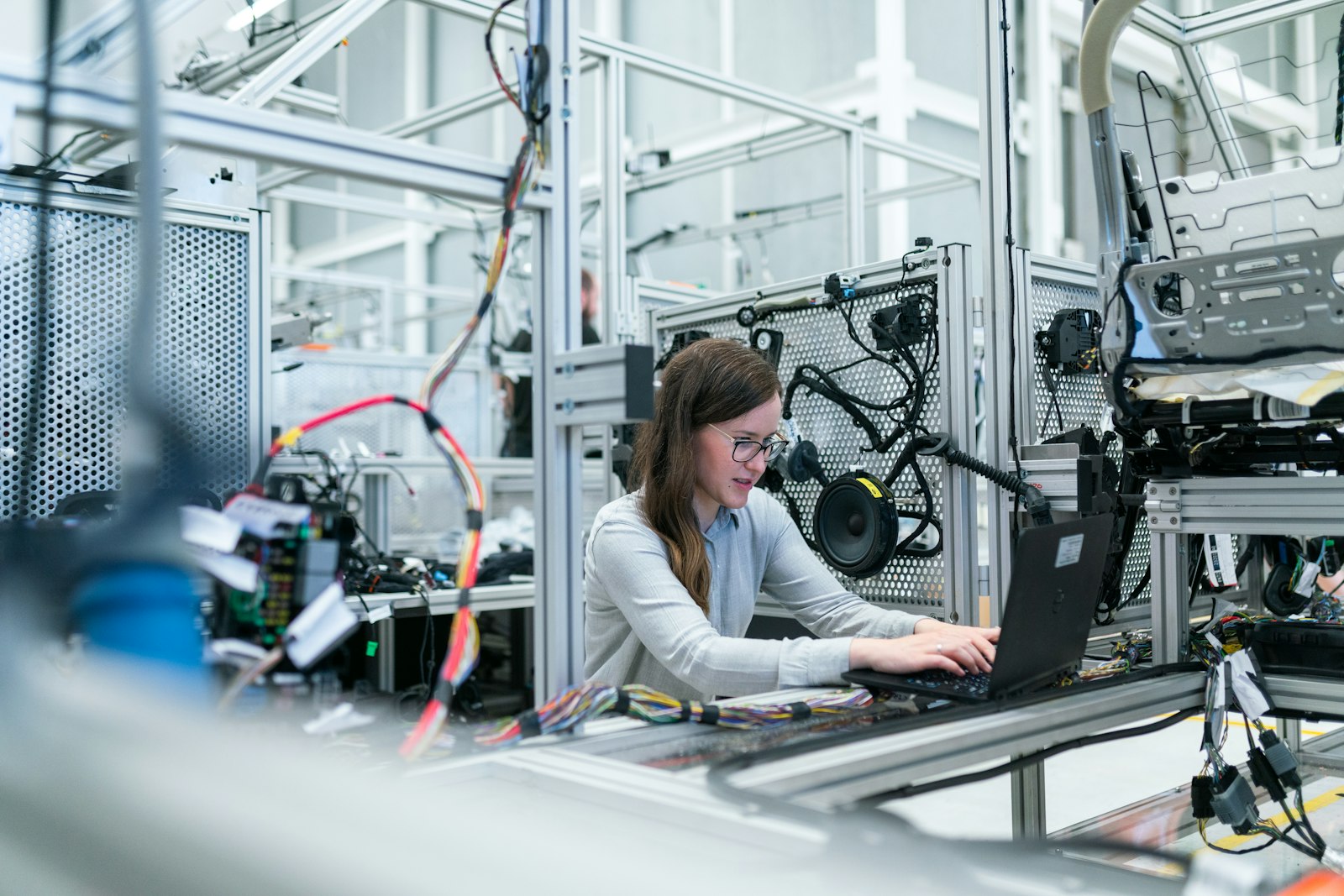
Manufacturing & industrial
Machines that outlived their documentation, and supplier data nobody can compare.

Chemicals & industrial biotech
Strain engineering runs on a loop; the loop moves at the speed of the data coming back.

Healthcare & clinical research
Two studies, one question, four vocabularies. Made analyzable together.
Not on the list? The pattern usually is. Ask us.
Tell us where your information sits today.
We will tell you honestly what we would do first — and what we would not.
Get in touch